
Thank you for Subscribing to Retail Business Review Weekly Brief


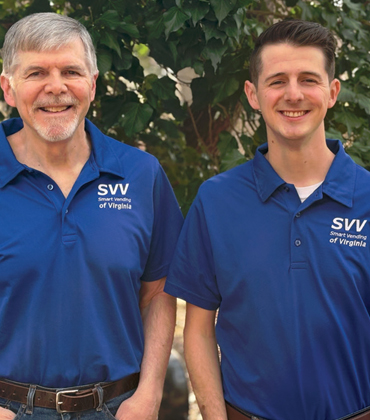 Michael Carpenter, Co-Founder and Matthew Carpenter, Co-Founder
In multifamily and workplace environments, vending is judged less by installation and more by uptime, product relevance, and response speed. Smart Vending of Virginia was built as a locally owned operation to meet that expectation through modern, cashless vending supported by hands-on service and direct accountability.
Serving communities from Williamsburg to Virginia Beach across the Hampton Roads region, the company operates as a responsive alternative to national providers, with owners personally involved in day-to-day client relationships.
Unlike fixed-route vending models that rely on scheduled visits, Smart Vending of Virginia, founded by Michael Carpenter and his son Matthew, uses real-time inventory visibility to determine when machines are serviced, updated and restocked. If an issue arises, clients reach the owners directly instead of being routed through distant teams, ensuring service decisions reflect on-site realities.
“We are part of the community. We do face-to-face check-ins ourselves, faithfully service the machines, and make sure clients receive the vending they expect,” Carpenter explains.
This demand-led operating system maintains consistent product availability while reducing unnecessary site visits. Machines are monitored remotely, so when restocking occurs, the team already knows what needs adjustment. Downtime is minimized, guesswork is eliminated, and actions are driven by usage data rather than fixed schedules.
Vending As a Self-Service Experience
Smart Vending of Virginia’s Micromart style cashless systems allow customers to select multiple items in a single transaction, with purchases tracked automatically through integrated technology. Customers can view products clearly, pay by card or mobile wallet, and complete purchases without repeating the payment process per item. The result is a self-service experience that feels closer to retail than conventional vending.
-
We are part of the community. We do face-to-face check-ins ourselves, faithfully service the machines, and make sure clients receive the vending they expect.
Each transaction includes a direct email contact option, allowing issues to be reported immediately. Underperforming products are replaced quickly, requested items are added without delay, and pricing can be updated online when required. This visibility enables teams in efficient restocking and faster issue resolution.
Vending That Adapts as Preferences Change
Customization is central to Smart Vending of Virginia’s value proposition. Clients are encouraged to suggest specific products, and changes are implemented within days. In one residential community, requested energy drinks and soft drinks were added to the machine during the next service visit. Seasonal offerings, including pumpkin-spiced beverages, were introduced and later rotated based on resident preferences. This approach keeps vending aligned to actual demand in high-end apartment environments rather than static menus.
For property managers, that responsiveness reduces oversight. Machines stay stocked, issues are addressed quickly, and product selections stay updated. For residents and employees, the experience remains simple, reliable and easy to use.
That same service discipline guides the company’s growth. Carpenter describes the business as a long-term venture. Smart Vending of Virginia has recently invested in freezer equipment to introduce frozen items at a client site, expanding beyond standard snacks and beverages. Growth is deliberate, with employees added only when demand requires.
This expansion is driven by service execution, not placement volume. Smart Vending of Virginia treats vending as a managed retail service rather than a maintenance task. By combining cashless technology, real-time inventory visibility, timely product updates, and directs owner involvement, Smart Vending of Virginia delivers dependable vending that keeps amenities stocked, residents satisfied, and performance consistent over time. In a category still dominated by route-based servicing, Smart Vending of Virginia demonstrates how demand-led execution and local accountability improve vending at the site level.
A Practical Standard for Modern Workplace Refreshment
Executives responsible for workplace services increasingly view on-site refreshment as part of the employee experience rather than a background convenience. Traditional snack machines, limited product visibility and inconsistent service no longer fit offices, apartment communities or mixed-use environments where expectations mirror retail settings. The modern vending environment favors reliability, visibility, choice and accountability, delivered without adding management overhead for the buyer.
Across the vending services landscape, several pressures shape decision-making. Employees and residents expect cashless access and transparent pricing. Facility managers want fewer service issues, predictable restocking and responsive support when something goes wrong. Property owners and employers also value providers that understand the rhythms of a location, adjusting offerings as preferences change rather than locking sites into static assortments that quickly feel outdated.
In this context, vending services are increasingly judged by how well technology supports consistency and responsiveness. Machines that allow users to view selections clearly, make one transaction for multiple items and rely on automated inventory tracking reduce friction on both sides of the transaction. For buyers, the benefit shows up in fewer complaints and less manual coordination. For users, the experience feels closer to a small self-service market than a coin-operated compromise.
Beyond baseline functionality, adaptability matters. Locations vary widely in what people want to buy, from energy drinks and soft drinks to seasonal or niche items. Providers that can adjust assortments quickly, respond to direct requests and change pricing without physical intervention are better positioned to keep machines relevant over time. This flexibility becomes especially important in environments such as higher-end apartment communities, where resident expectations evolve and variety matters.
Local accountability also plays an understated but essential role. Large national operators can offer scale, but they often rely on layered service structures that distance decision-makers from day-to-day site performance. Buyers frequently prefer partners that maintain direct relationships, offer face-to-face check-ins and treat service reliability as a reflection of their standing in the community rather than a contractual obligation alone.
Smart Vending of Virginia reflects these priorities in practice. Operating across the Hampton Roads area, it focuses on cashless micro-market style machines that allow customers to select multiple items in a single interaction, automatically track what is taken or returned and display all products clearly before purchase. Inventory data is monitored remotely, enabling targeted restocking rather than guesswork. This approach reduces downtime and supports consistent availability without unnecessary site visits.
The company also emphasizes responsiveness to location-specific preferences. Clients can request particular products, seasonal items or adjustments based on observed buying patterns, and changes can be implemented quickly through online management tools. Direct owner involvement in service check-ins reinforces accountability and keeps communication straightforward, particularly for property managers and employers who value knowing exactly who to contact when needs arise.
For executives evaluating vending services as part of a broader workplace or residential experience, Smart Vending of Virginia stands out as a disciplined, technology-enabled and locally grounded option. Its combination of cashless convenience, adaptable product management and direct service oversight aligns well with environments that expect consistency without complexity, making it a strong choice for organizations seeking dependable refreshment services that evolve with their locations.
...Read more
Vending Machine Services Info
Q1
What Are Vending Machine Services?
Vending Machine Services cover the placement, stocking, monitoring, payment experience and upkeep of self-service refreshment equipment. In modern settings, the category goes beyond snack access. It includes cashless transactions, assortment updates, issue response and data-informed restocking so machines remain useful for people who depend on convenient on-site food and beverage options. For property, workplace and residential environments, the value comes from dependable availability with minimal daily coordination.
Q2
How Does Smart Vending of Virginia Support Modern Vending Needs?
Smart Vending of Virginia shows how Vending Machine Services can combine technology with local accountability. It serves the Hampton Roads region, from Williamsburg to Virginia Beach, with modern cashless vending. Michael Carpenter and Matthew Carpenter remain directly involved in client relationships, while real-time inventory visibility helps determine when machines need service, updates or restocking instead of relying only on fixed routes. Its micro-market style systems also allow users to choose multiple items in one transaction.
Q3
What Capabilities Matter Most in Cashless Vending?
Cashless vending should make buying simple while giving operators better visibility into performance. Useful capabilities include card and mobile wallet payments, clear product display, automatic transaction tracking and the ability to buy several items in one interaction. Vending Machine Services built around these features can reduce friction for users and give service teams better information for restocking and support. They also help locations move away from coin-dependent machines toward a more retail-like self-service experience.
Q4
How Can Product Selection Stay Relevant Over Time?
Product selection stays relevant when operators respond to actual location demand rather than treating every machine as static. Vending Machine Services may include monitoring sales patterns, replacing slow-moving items, adding requested products and rotating seasonal choices. This helps keep assortments aligned with user preferences while reducing complaints, wasted stock and unnecessary oversight for site managers. Fast product changes are especially useful where residents or employees expect variety, clear choices and items that match current buying habits.
Q5
Why Is Local Accountability Important in Vending Machine Services?
Local accountability matters because vending performance is often judged by everyday reliability. When communication is direct, service concerns can be resolved faster and product decisions can reflect what is happening at a specific site. Vending Machine Services with local oversight can support consistent availability, fewer unresolved issues and a stronger connection between the equipment, the location and the people using it. It also makes restocking decisions feel less remote and more responsive to the real service environment.
Q6
How Should Organizations Evaluate a Managed Refreshment Partner?
Organizations should evaluate whether a provider can maintain uptime, adapt product choices and respond quickly when users report problems. Strong Vending Machine Services should also offer transparent payment options, inventory insight and a practical service model that limits unnecessary visits. The best fit is usually a partner that treats vending as a managed retail experience, not a passive machine placement. Evaluation should include technology, communication, assortment flexibility and the ability to keep machines stocked without adding work for the site team.
Company : Smart Vending of Virginia
ManagementMichael Carpenter, Co-Founder and Matthew Carpenter, Co-Founder
